
This Bai Hao Yin Zhen (白毫银针) comes from Mei Bo Zhen (梅伯珍), a Fuding white-tea producer whose packaging identifies the tea simply as Yin Zhen (银针). The back states a 2025 raw-material year. This was a delicate session, but not a static one: the tea began like a fragrant flower infusion before an unexpected mint-citrus layer emerged and became its defining character.


Tea at a Glance
| Detail | Information |
|---|---|
| Tea | Bai Hao Yin Zhen / Silver Needle |
| Chinese | 白毫银针 |
| Type | White Tea |
| Origin | Fuding, Fujian, China |
| Producer | Mei Bo Zhen / 梅伯珍 |
| Raw-material year | 2025, as stated on the packaging |
| Overall score | 8.4/10 — Very Good |
Brewing Parameters
- Water: Volvic Natural Mineral Water
- Teaware: Mutton Fat Jade Porcelain Gaiwan
- Leaf: 5.0 g
- Water volume: 100–120 ml
- Temperature: 90°C for Infusions 1–8; 95°C for Infusion 9
- Rinse: None
- Infusion times: 20, 20, 25, 30, 40, 50, 70 and 90 seconds; then 2 minutes
- Total infusions: 9
Dry Leaf

The 5.0 g portion contained plenty of intact, elongated buds covered in fine silver hair. There was some variation in bud size and a small amount of green leaf or stem material, so the dry appearance alone did not suggest immaculate exhibition-grade picking. The spent leaves would later show the material more clearly.
Warm Gaiwan
Lid: Mild honeydew.
Cup: Fresh flowers and rock melon.
The warmed leaf already showed a pleasant distinction: soft honeydew from the lid, followed by a more floral and aromatic rock-melon impression in the cup.
Infusion Journey
Infusion 1 — 90°C · 20 sec
Lid: Honeysuckle.
Cup: Slightly medicinal, with apricot-like stone fruit and fresh grass.

The liquor was light and fragrant—almost more reminiscent of a flower infusion than tea. White chrysanthemum stood out, supported by a mildly sweet body. The opening was delicate rather than vegetal or strongly tea-like: honeysuckle, white chrysanthemum, apricot, fresh grass and gentle sweetness.
Infusion 2 — 90°C · 20 sec
The liquor deepened to a more golden yellow and gained body. A nectar-like honey quality emerged while the tea remained light and delicate, finishing with a gentle sweet aftertaste.
Infusion 3 — 90°C · 25 sec
The profile of the first two infusions remained—light florals, honeyed nectar and gentle sweetness—but another layer appeared above it. The overlay was clearly perceptible, giving the tea greater complexity and dimension, yet it was initially difficult to describe.
Infusion 4 — 90°C · 30 sec
The mysterious layer revealed itself: minty and gently cooling, like specks of clouds floating above the underlying flavour rather than dominating it.
At the same time, a new fruit character emerged—fully ripe, orange-like citrus, but lighter and more delicate than an orange.
Infusion 5 — 90°C · 40 sec · The Peak
The overlay became the main character: mint and light citrus. The earlier honeyed floral sweetness remained underneath, but the experience was now driven by the cooling, refreshing citrus character.
I take in the air and fragrance of the citrus garden. My body is refreshed.
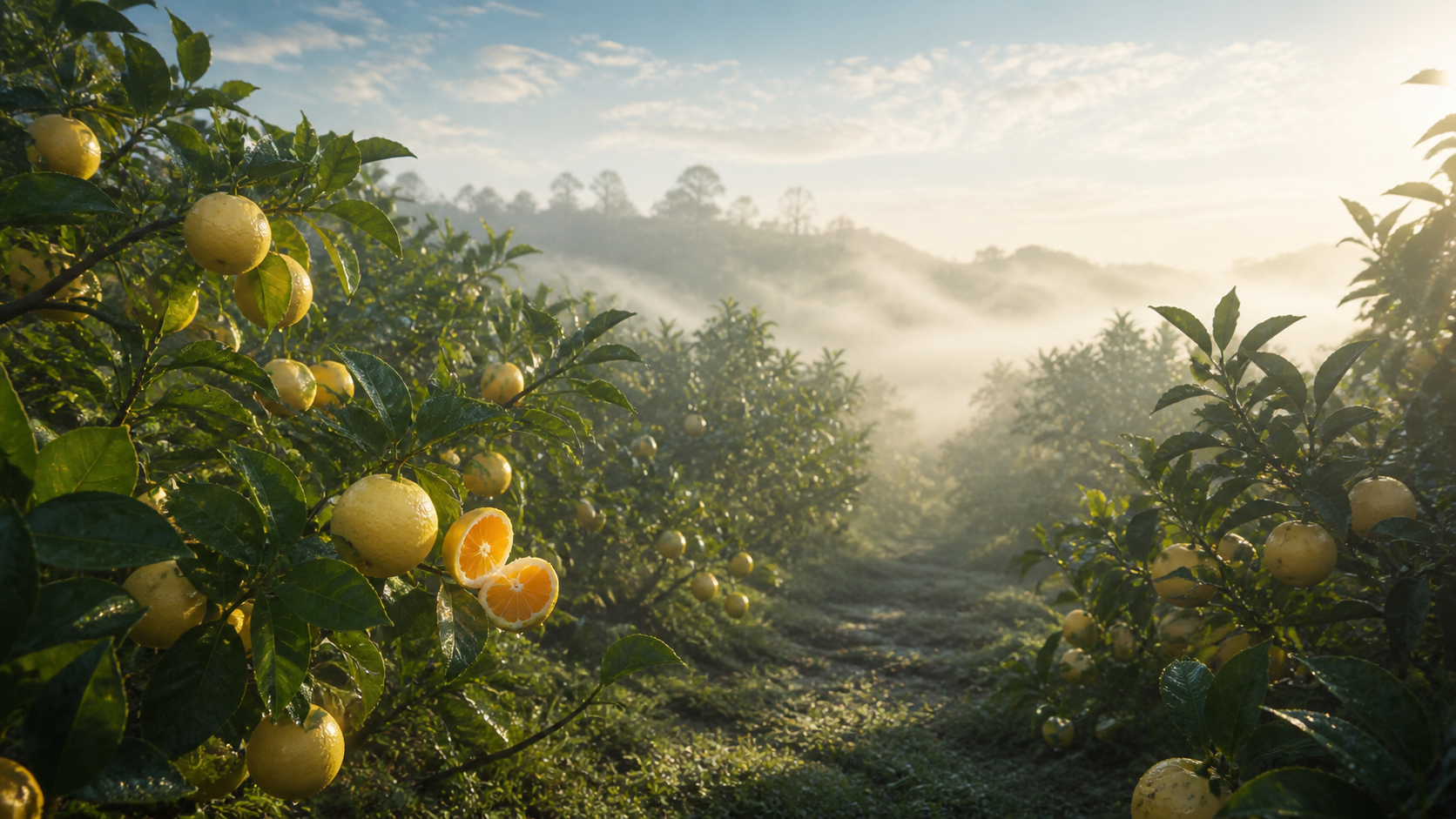
Tea Imagery — The Citrus Garden
A citrus orchard filled with fully ripe, orange-like fruit—lighter and more delicate than oranges. The fruits burst open among the trees. I breathe in the cool, fragrant air of the orchard, and my body feels refreshed.
This was one sustained scene rather than a sequence. The imagery arrived as the mint-like cooling freshness and light citrus became clear, then remained through the middle of the session.
Infusion 6 — 90°C · 50 sec
The minty, cooling character persisted. Beneath it, a light floral quality and the distinctive delicate character of white tea remained. The tea did not change direction; it held the profile established at the peak. The image stayed the same: the fragrant, refreshing air of the citrus garden.
Infusion 7 — 90°C · 70 sec
Essentially unchanged from Infusion 6. Minty freshness continued alongside light florals and the characteristic white-tea profile. The sustained citrus-garden imagery also remained. The consistency confirmed Infusions 4–7 as the heart of the session.
Infusion 8 — 90°C · 90 sec
The minty profile held, but the supporting floral, citrus and characteristic white-tea flavours began to fade. The liquor was noticeably simpler, with the cooling mint character the last major element to remain.
Infusion 9 — 95°C · 2 min
The taste had faded considerably but was still distinguishable. It had not become plain sweet water: the residual character remained recognisable, although substantially lighter than during Infusions 4–7.
Spent Leaves


The wet material was predominantly composed of complete, elongated buds. Many remained plump and tightly formed even after repeated brewing. The second angle made clear that what initially looked like conventional open leaf was largely swollen buds or bracts viewed from the side.
The buds varied somewhat in size, and a few stems and imperfect pieces remained. Their olive- to yellow-green colour also showed some browning. Even so, this was convincingly bud-dominant Bai Hao Yin Zhen material, with good structural integrity after nine infusions and respectable picking quality.
Tasting Scorecard
| Category | Score | Assessment |
|---|---|---|
| Dry / Warm Leaf Aroma | 8.0/10 | Honeydew, fresh flowers and rock melon. |
| Wet Leaf / Lid Aroma | 8.2/10 | Honeysuckle, light medicinal-herbal character, apricot and fresh grass. |
| Floral | 8.3/10 | Fresh flowers, honeysuckle and especially white chrysanthemum. |
| Fruit | 8.2/10 | Honeydew, rock melon and apricot, developing into light ripe citrus. |
| Sweetness | 8.0/10 | Mild initially; develops into honeyed nectar with a sweet finish. |
| Freshness / Cooling Character | 8.8/10 | The standout feature. Mint-like cooling emerges around Infusions 3–4 and eventually becomes dominant. |
| Texture / Body | 7.8/10 | Initially light, gaining noticeably more nectar-like body by Infusion 2. |
| Complexity / Development | 8.6/10 | Excellent evolution: floral → nectar → mysterious overlay → mint and citrus. |
| Aftertaste / Huigan | 8.0/10 | Gentle lingering sweetness with persistent cooling freshness. |
| Endurance | 8.7/10 | Strong through 7; mint survives 8; still recognisable at 9. |
| Leaf Quality | 8.2/10 | Predominantly intact, elongated buds with good integrity after repeated brewing. |
| Overall | 8.4/10 | Very Good |
Defining character: White chrysanthemum · honeysuckle · honeyed nectar · light citrus · mint-like cooling freshness
Peak: Infusion 5
Best stretch: Infusions 4–7
Endurance: 9 infusions
Overall Impression
The defining feature of this Bai Hao Yin Zhen was not sheer strength. It was transformation.
The tea began with honeydew, fresh flowers and rock melon. Honeysuckle, apricot and fresh grass followed, while the liquor itself felt almost like a white-chrysanthemum infusion. By the second infusion, it had gathered a nectar-like honeyed body and a gentle returning sweetness.
Then the session changed. A hard-to-name overlay appeared before resolving into mint-like cooling freshness—specks of clouds—and light, ripe citrus. By Infusion 5, that mint-citrus layer had become the main character, carrying me into the air and fragrance of a citrus garden.
Its main limitation was the light opening and a body that never became exceptionally rich or powerful. Its strengths were development, freshness and endurance: the middle infusions held remarkably well, the mint persisted into the eighth, and the tea remained distinguishable after a final two-minute infusion at 95°C.
World Tea Verdict
- Overall: 8.4/10 — Very Good
- Best for: Drinkers who enjoy delicate white tea with an evolving floral, honeyed and cooling profile
- Character: Fragrant, refreshing and quietly transformative
- Peak: Infusion 5
- Best stretch: Infusions 4–7
- Endurance: 9 infusions
Brewing Recommendation
Use 5 g of leaf in a 100–120 ml porcelain gaiwan with Volvic Natural Mineral Water at 90°C. Do not rinse. Begin with two 20-second infusions, then extend gradually through 25, 30, 40, 50, 70 and 90 seconds. A final 95°C, two-minute infusion can test the tea’s remaining endurance.
发表评论