In brief: A rounded, savoury Bama Tea Longjing that moves through edamame, sweet corn, wheat and buttery nuttiness before returning to enveloping steamed-edamame sweetness across eight infusions.
How to interpret the recorded scorecard
八马茶业 龙井茶 — a 4 g session across eight infusions
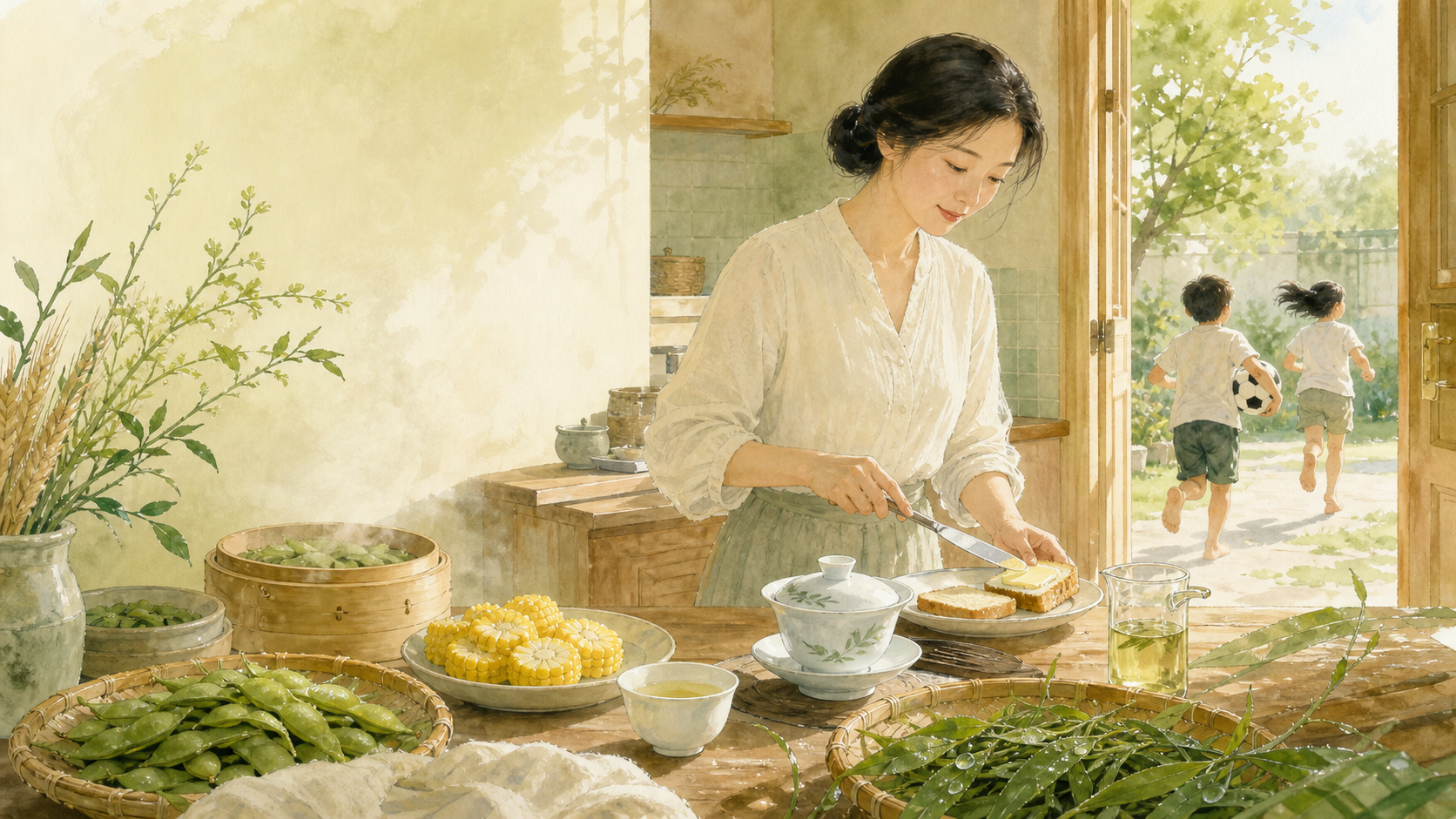
There are teas that announce themselves through a single unmistakable note. This Longjing did something more narrative: it built a breakfast scene.
The session began quietly, with fresh grass and light jasmine in the dry leaf. Warmth turned that freshness into edamame, sweet corn and faint pandan. In the cup, the tea passed through morning leaf-dew, beans, wheat drink and a mellow hummus-like savouriness before a mild sweetness emerged and wrapped itself around the fading body. By the eighth infusion, steamed edamame had returned—softer, sweeter, and recognisably connected to the warm-leaf aroma at the beginning.
Tea at a Glance
| Tea | Longjing / 龙井茶 |
|---|---|
| Brand | Bama Tea / 八马茶业 |
| Category | Green tea |
| Sample | 4.0 g |
| Vessel | Gaiwan |
| Water volume / source | Not recorded |
| Session | 8 infusions |
| Temperature | 75°C for Infusion 1; 77°C thereafter |
| Overall score | 84 / 100 |
Dry Leaf
The classic flat-pressed Longjing form was clear: slender yellow-green to olive-green leaves, with visible tender buds and bud–leaf sets. The sorting was moderately uniform, with some broken material.
“Fresh grass and jasmine flowers. Though light.”
In the warmed gaiwan, the lid suggested edamame and sweet corn; the cup carried a similar aroma with a faint pandan note.
Infusion by Infusion
Infusion 1 — 75°C · 30 sec
The lid held cooked leafy vegetables while preserving the distinct edamame-and-sweet-corn combination. The cup aroma was deeper than it had been in the dry leaf. The liquor was a clear, light yellowish green, and the rounded taste brought the session’s first image:
“Dew of fresh leaves in the morning.”
Infusion 2 — 77°C · 35–40 sec
The profile became nutty and bean-like, with the comforting grain character of a wheat drink. It remained smooth and gained a little savouriness.
Infusion 3 — 77°C · 45 sec
Buttery and smooth, the tea grew mellower and rounder:
“A very mellowed-down hummus spread, with a slight bitter aftertaste.”
The hummus association captured the tea’s creamy, savoury and gently leguminous character. The bitterness belonged to the aftertaste rather than the main body.
Infusion 4 — 77°C · 60 sec
Nutty, beany and rounded, with the balance now leaning more savoury than sweet. A very slight bitter aftertaste came and went.
“I see a mother preparing breakfast, spreading this buttered tea on the bread while the children quickly take them out and gobble them down before going to play.”
Infusion 5 — 77°C · 75 sec
The taste and body held steady: rounded, nutty-beany, buttery and predominantly savoury.
“The mum sees them leave to play. She dips into the contents with a butter knife and eats from it—not taking bread.”
The distinction matters. The tea was no longer merely something spread on breakfast; in the imagery, it had become the spread itself.
Infusion 6 — 77°C · 90 sec
A mild sweetness began to envelop the liquor. It was unclear whether that sweetness had newly emerged or had been present all along, only becoming perceptible with deeper attention. A quick, mild bitterness passed into a nutty aftertaste.
“Mum takes another ‘bite’ of the buttered contents, then washes and cleans the knife. She sees the children playing ball from the kitchen window.”
Infusion 7 — 77°C · 2 min
The body remained nutty but had become a little bland. The enveloping sweetness persisted and grew sweeter even as the main flavour lost intensity. The bitterness was gone.
“Mum packs up and leaves the kitchen, moving on to her next task.”
Infusion 8 — 77°C · 3 min
The yellow-green colour persisted. Nuttiness was minimal now; in its place came a more vegetal, beany sweetness:
“Steamed edamame.”
The tea had come almost full circle. Edamame first appeared in the warm-gaiwan aroma, disappeared beneath the buttery and savoury middle infusions, then returned as a sweeter steamed-edamame character at the end.

The Arc of the Session
Fresh grass and jasmine → edamame and sweet corn → morning leaf-dew → nuts, beans and wheat drink → buttery hummus-like savouriness → mild bitterness → enveloping sweetness → steamed-edamame sweetness
The strongest quality of this Longjing was coherence. Its flavour was not especially floral or showy, and its dry-leaf fragrance began lightly, but the tea possessed a rounded, smooth body and a clear savoury identity. It also endured: eight infusions from a 4 g sample, with the final cup still coloured and recognisably sweet and vegetal.
Green-Tea Tasting Scorecard
| Category | Score | Evidence |
|---|---|---|
| Dry-leaf appearance | 7.5 / 10 | Classic flat-pressed form and tender bud–leaf structures, with some breakage. |
| Dry and warm aroma | 8.5 / 10 | Fresh grass and jasmine developed into edamame, sweet corn and faint pandan. |
| Liquor / clarity | 8.5 / 10 | Clear yellowish-green liquor; colour persisted through Infusion 8. |
| Flavour definition | 8.5 / 10 | Clear nut, bean, wheat-drink, buttery and steamed-edamame notes. |
| Texture / body | 8.5 / 10 | Rounded, smooth and buttery through the middle infusions. |
| Sweetness / savoury balance | 8.5 / 10 | Savoury middle and an enveloping late sweetness. |
| Aftertaste | 8.0 / 10 | Brief intermittent bitterness and a nutty finish. |
| Balance / refinement | 8.0 / 10 | Cohesive and controlled, though a little bland late. |
| Evolution / complexity | 9.0 / 10 | Coherent progression and return to sweet steamed edamame. |
| Endurance | 9.0 / 10 | Eight infusions from 4.0 g with recognisable final sweetness. |
| Total | 84 / 100 | Rounded, coherent and notably enduring. |
Verdict
This was a comforting, food-like Longjing built around beans, grain, butter and gentle sweetness. Its slight intermittent bitterness never overwhelmed the session and disappeared before the end. What made the tea memorable was the way its sensory progression generated a continuous scene: a mother preparing breakfast, children rushing outside to play, and the kitchen settling back into quiet as the sweetness remained.
WorldTea.blog score: 84 / 100
Scoring note: the score is based only on the recorded tasting. Water source and volume, exact vessel capacity, provenance, harvest date and spent-leaf appearance were not inferred.
发表回复