Dry Leaves
Appearance
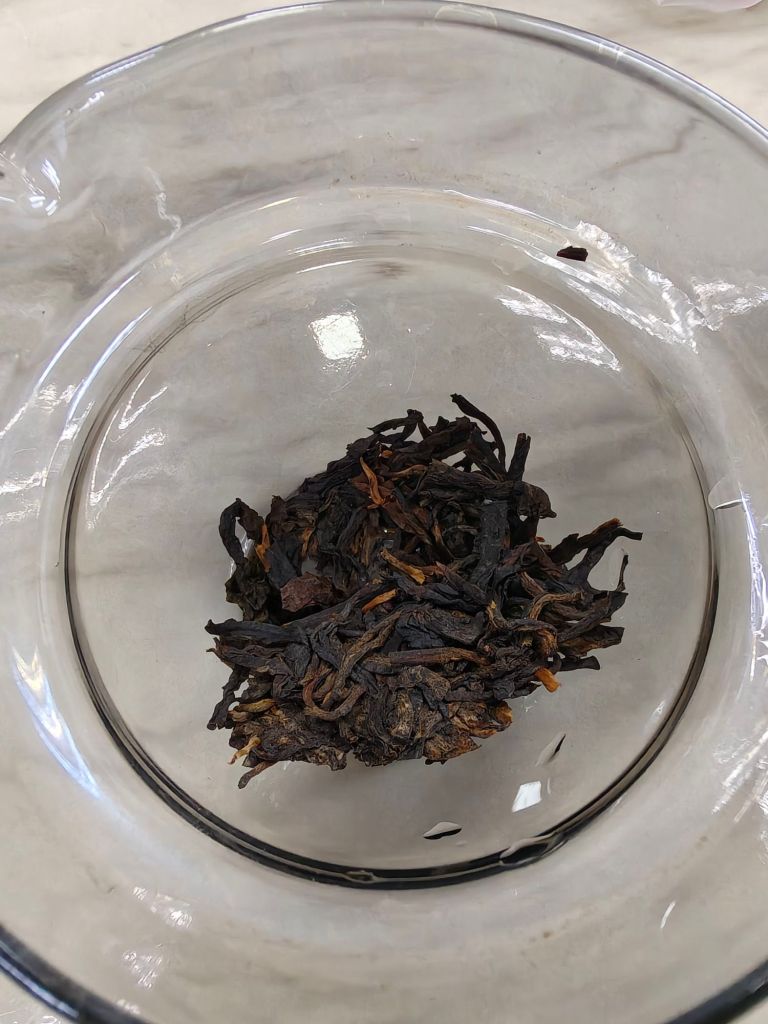
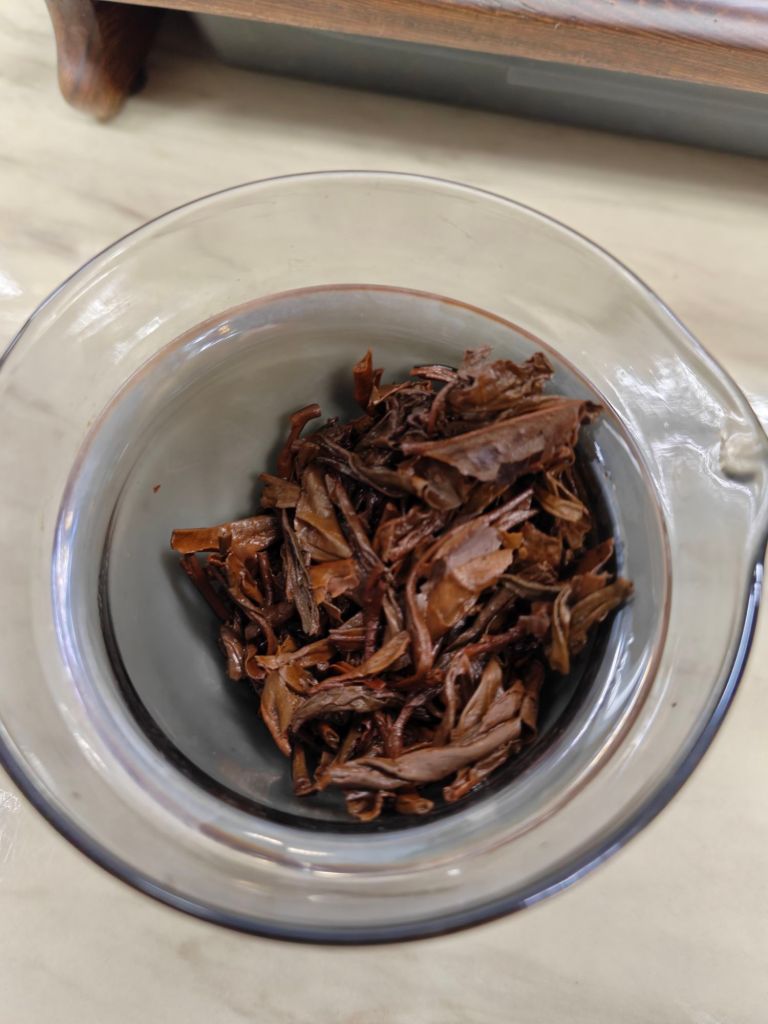
The dry leaves are dark, mature, and contemplative. Twisted leaves and stems lie quietly before me. There is little desire to impress. Unlike aged white tea with its immediate fragrance, these leaves sit silently, as though waiting to be understood.
Aroma
The aroma is faint.
Earth.
Old leaves.
Weathered wood.
Nothing leaps forward. The scent remains close to the leaf, requiring attention rather than demanding it.
—
Warmed Gaiwan
The warmth awakens what was hidden.
Hints of camphor, dried fruit, sweet herbs, and wet branches emerge from the leaves. The fragrance remains restrained, yet deeper and more complex.
It feels like standing at the edge of an old forest after rain.
—
After the First Rinse
The forest awakens.
What were once separate notes merge into a single aroma.
Forest floor.
Fallen leaves.
Weathered bark.
Earth softened by time.
The tea no longer smells like ingredients.
It smells like a place.
—
First Infusion
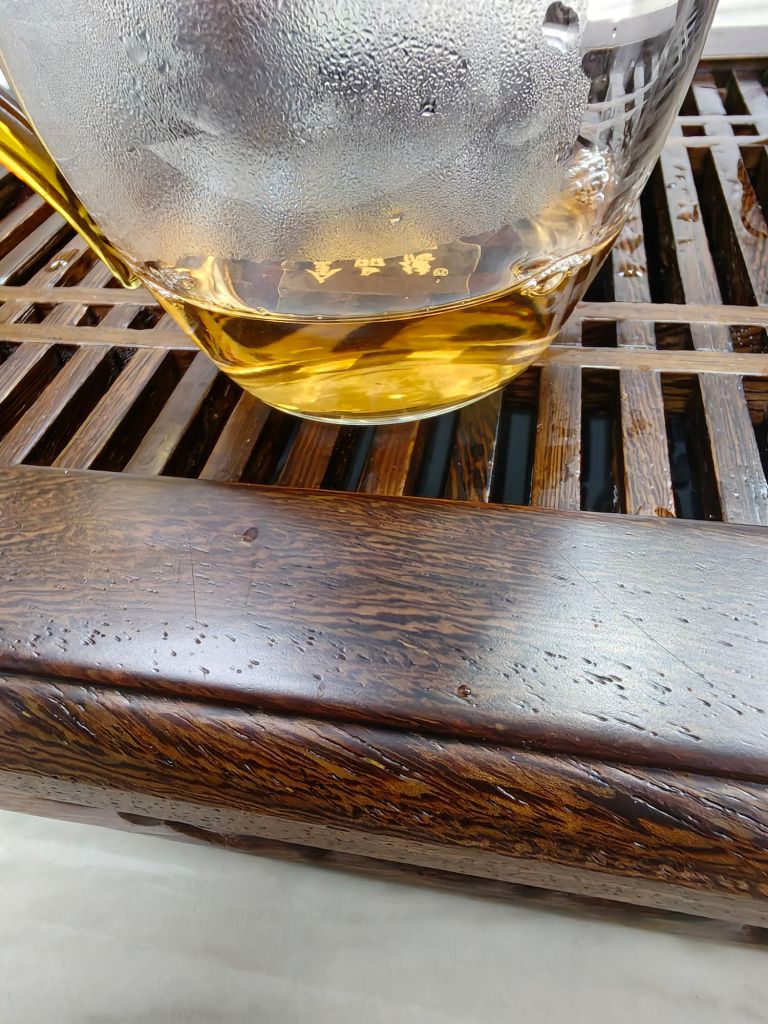
The liquor shines a clear golden amber.
The forest aromas remain. A mild earthiness appears on the tongue, accompanied by a fleeting bitterness that arrives and departs quickly.
The tea introduces itself quietly.
—
Second Infusion
The forest grows more pronounced.
It feels as though rainwater has filtered through layers of leaves, roots, bark, and soil before finding its way into the cup.
The tea speaks less through flavour than through landscape.
I am no longer drinking tea.
I am walking through a forest.
—
Third Infusion
The amber deepens.
My nose begins to clear.
This time the bitterness announces herself.
She knocks upon my door and asks to enter.
I let her in.
Unlike before, she stays.
The bitterness coats the tongue and lingers into the aftertaste.
Yet hidden within it is sweetness.
The two are no longer opposites.
They are companions.
—
Fourth Infusion
The bitterness reveals herself completely.
The deeper the bitterness, the sweeter the tea becomes.
My tongue is fully coated.
The tea seems to say,
“Look at me.
Touch me.
Feel me.”
The forest no longer stands at a distance.
It steps forward and makes contact.
—
Fifth Infusion
My tongue has either adapted to the bitterness, or the bitterness herself has begun to retreat.
The flavours soften.
For a moment I feel teased and left wanting more.
Then the tea changes.
The tongue remains coated.
Now the throat joins the conversation.
The tea whispers,
“You have spent enough time tasting me.
Let me show you where I remain after the taste is gone.”
—
Sixth Infusion
The bitterness fades into memory.
Earlier, the tea awakened a thirst within me.
Now it becomes the answer to the thirst it created.
The liquor is smooth, warm, and effortless.
A tasteless—
yet tasteful—
swallow.
The forest no longer speaks through earth or bitterness.
It speaks through comfort.
—
Seventh Infusion
The forest breeze returns.
Wood.
Leaves.
Earth.
The faintest trace of bitterness.
It is as though our time together has reached its natural conclusion.
I open the door and let the guest leave.
As she steps out, the forest wind enters.
Nothing dramatic is said.
Only a quiet farewell.
—
Eighth and Final Infusion
I wanted more.
She said no.
Yet before leaving, she offered one final gift.
The liquor had become little more than water filtered through a forest.
The flavours had mostly returned to where they came from—
leaves,
wood,
earth,
and wind.
Yet a delicate bitterness remained behind, coating the tongue.
Not enough to challenge.
Not enough to satisfy.
Only enough to remember.
The guest had already risen to leave.
The bitterness remained behind as a keepsake.
—
Final Reflection
The twenty-year Bai Mu Dan taught me that flavour could disappear and still remain.
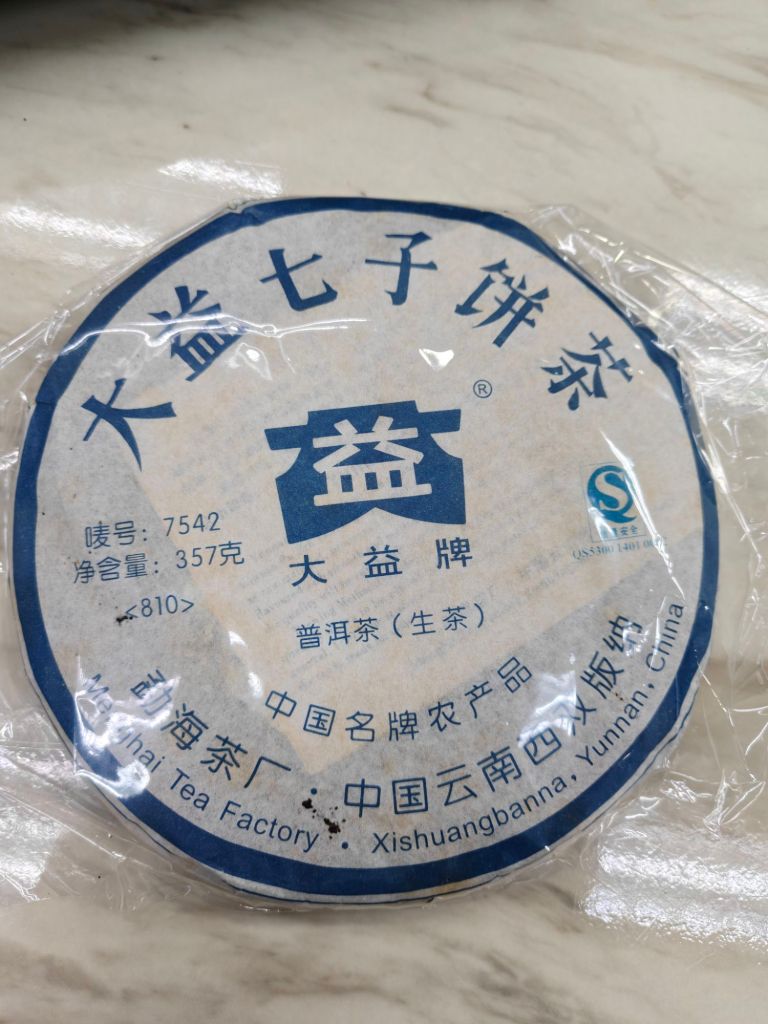
This 2008 Dayi 7542 taught me something different.
The deeper the bitterness,
the sweeter.
What began as earth became a forest.
What began as bitterness became companionship.
And when the guest finally departed,
she left the door open,
so that the forest breeze could remain.
 worldtea
Leave a comment