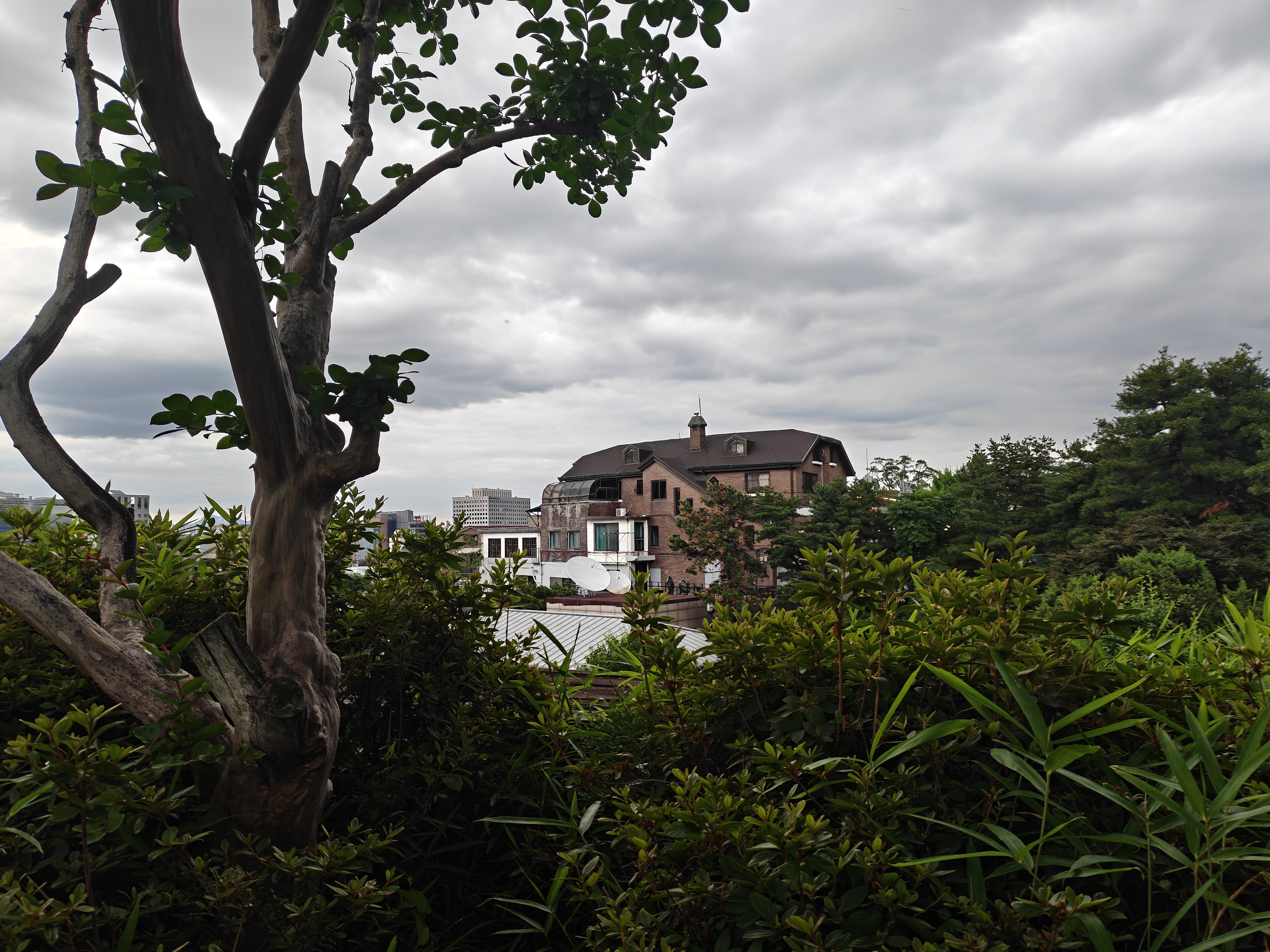
“Autumn Mountain”
Brewing Parameters
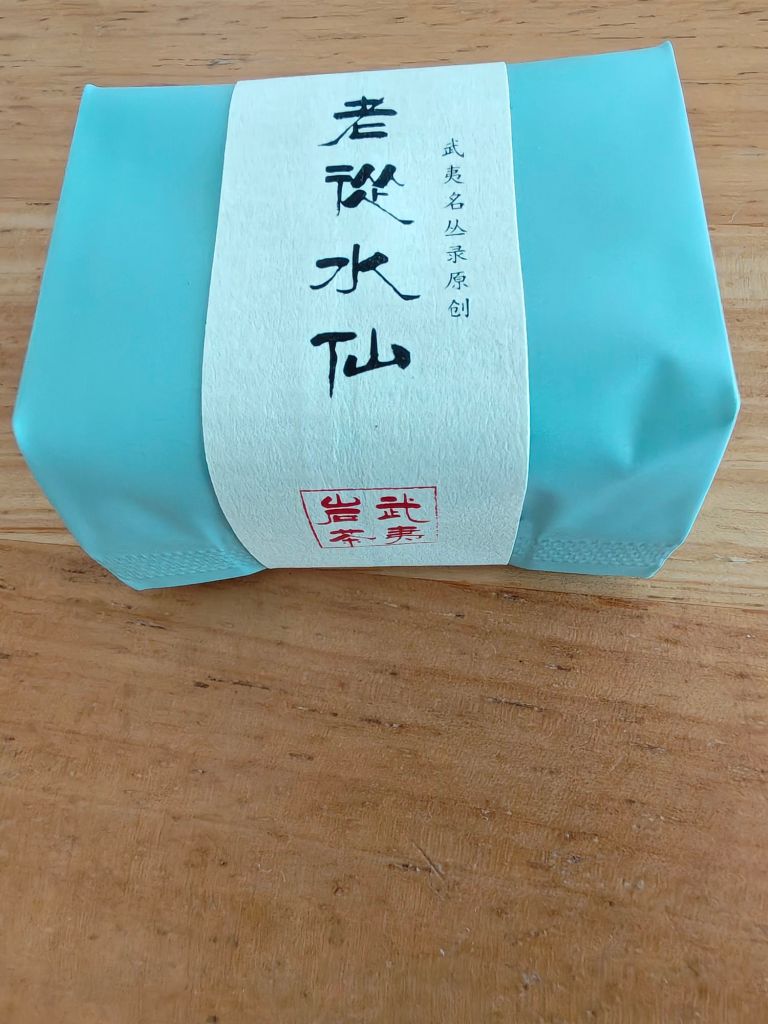
Tea: Lao Cong Shui Xian
Water: Volvic Natural Mineral Water
Teaware: Mutton Fat Jade Porcelain Gaiwan
Leaf: 4 g
Water Temperature: 95–100°C
Gaiwan: 100 ml
Infusions: 10
—
Dry Leaves
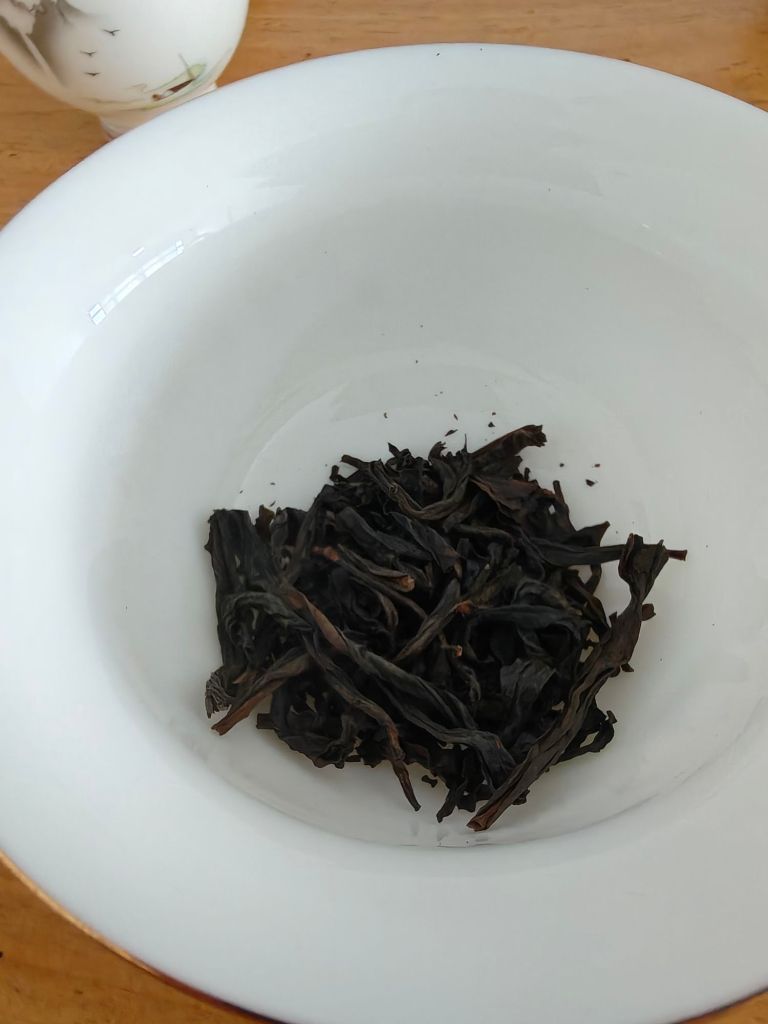
The leaves are long, dark and twisted with mature stems visible throughout.
The dry aroma opens with charcoal and old wood, accompanied by a restrained sweetness. Gentle smoke lingers beneath the roast while hints of cinnamon emerge from the background.
The tea already feels autumnal.
—
Warmed Gaiwan
The lid carries warm cinnamon and sweet spice.
The heated leaves deepen considerably, revealing earthy sweetness reminiscent of dried dates together with old timber. Everything from the dry leaves remains, only richer and fuller.
—
After the Rinse
The transformation is dramatic.
The charcoal retreats into the background while an entire forest awakens.
The leaves now smell of damp forest floor after rain, autumn leaves, wood, faint flowers and distant fruits woven together into something difficult to describe. The sweetness changes completely—less sugary, more like nature itself.
The aroma alone creates anticipation.
—
First Infusion
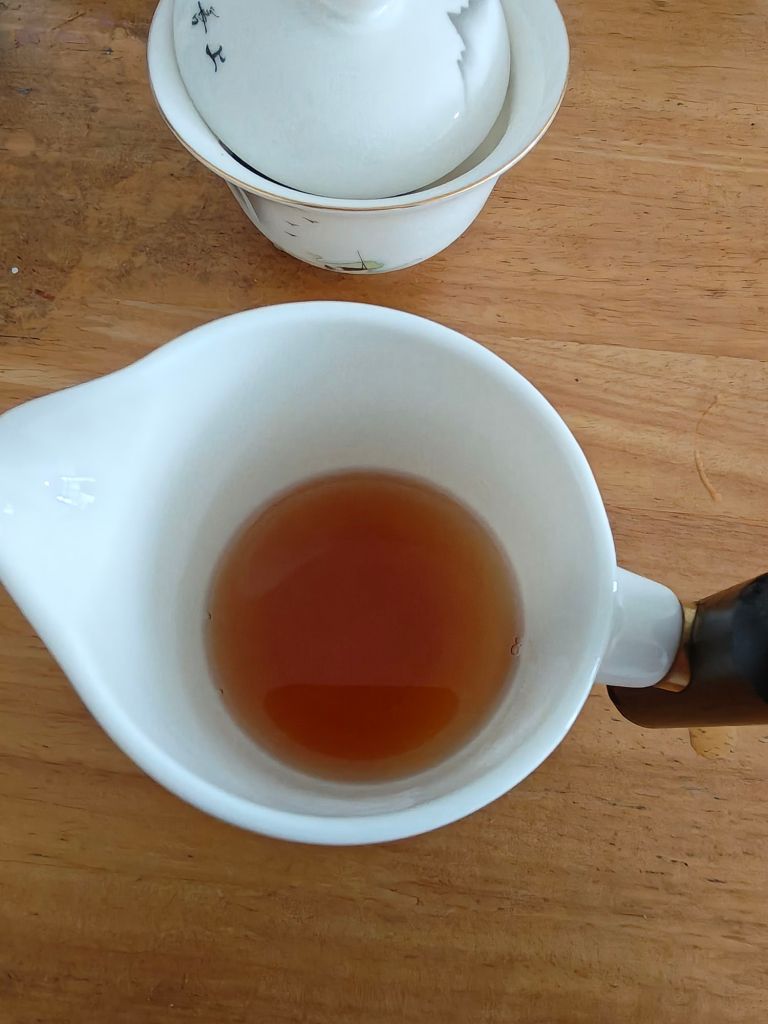
The liquor is a clear amber-brown like light roasted chestnuts
The first sip is gentle and creamy.
A mild sweetness appears immediately before settling across the roof of the mouth. The tea is smooth without being thin.
The landscape appears.
An autumn forest after rain.
The ground is covered by fallen leaves.
Everything is quiet.
—
Second Infusion
The body thickens.
Forest floor, bark and charcoal become more pronounced while bitterness quietly gathers in the distance without fully arriving.
The liquor resembles drinking the life within freshly cut timber.
The tongue remains coated with a pleasant woody sweetness.
—
Third Infusion
The minerality steps forward.
At the tip of the tongue appears a sensation difficult to describe.
It resembles cold autumn air carrying the scent of falling red leaves.
The wind begins moving through the forest.
Large trees sway while red fallen leaves spiral through the air.
Deep within the finish emerges charcoal once more before fading into tree bark.
—
Fourth Infusion
Bitterness finally arrives.
Yet it arrives together with sweetness.
Neither dominates.
Together they form a lingering bittersweet finish that coats the entire mouth.
The wind grows stronger.
Meanwhile the body begins warming from within.
—
Fifth Infusion
Here the tea reveals its true character.
Minerality.
Wood.
Charcoal.
Bitterness.
Sweetness.
Nothing stands apart any longer.
Everything becomes one.
It is like drinking water flowing from a deep cave before reaching the sea.
—
Sixth Infusion
The flavours become increasingly refined.
It tastes like autumn rainwater that has travelled through trees, fallen leaves, forest earth and stone before finally reaching the cup.
The warmth spreads throughout the body.
—
Seventh Infusion
The flavours continue blending while becoming increasingly transparent.
Only their essence remains.
I remember an old man beside a mountain well who once offered me a bowl of water.
This tea seems to come from the very same source.
—
Eighth (to Tenth) Infusions
The flavours soften until they resemble mountain dew gathered at dawn.
The minerality remains, but only as a quiet memory beneath clear spring water.
I pick up a small stone from the mountainside and place it inside my pocket.
The strong wind becomes a breeze.
Eventually, even the breeze fades.
—
Wet Leaves
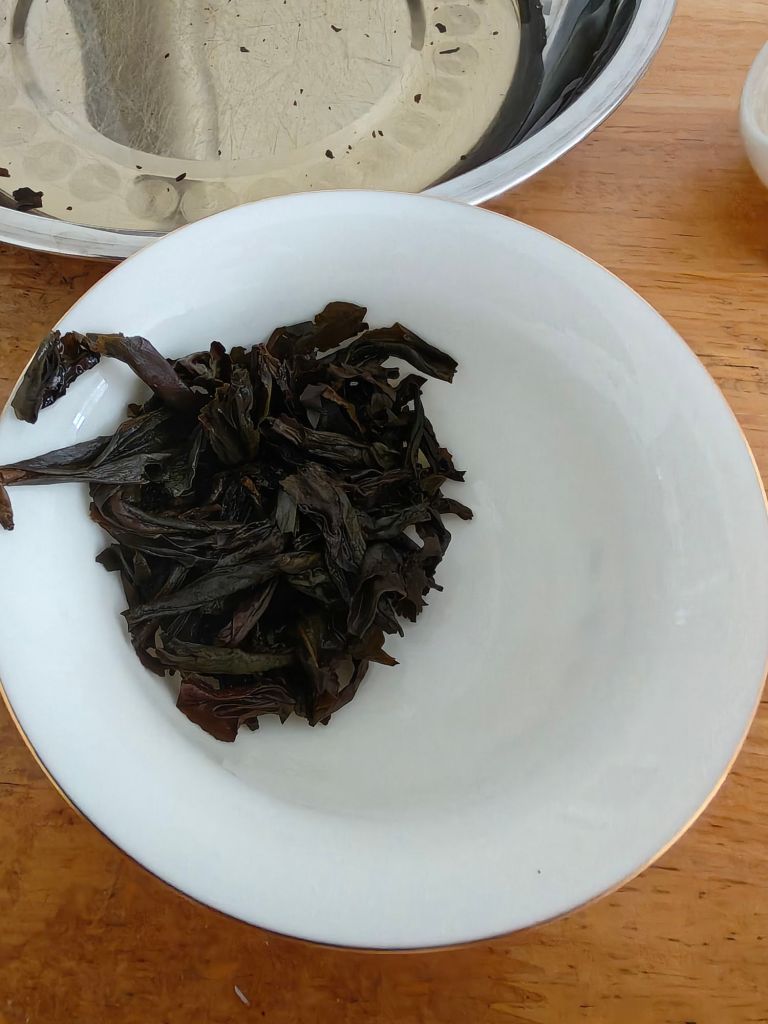
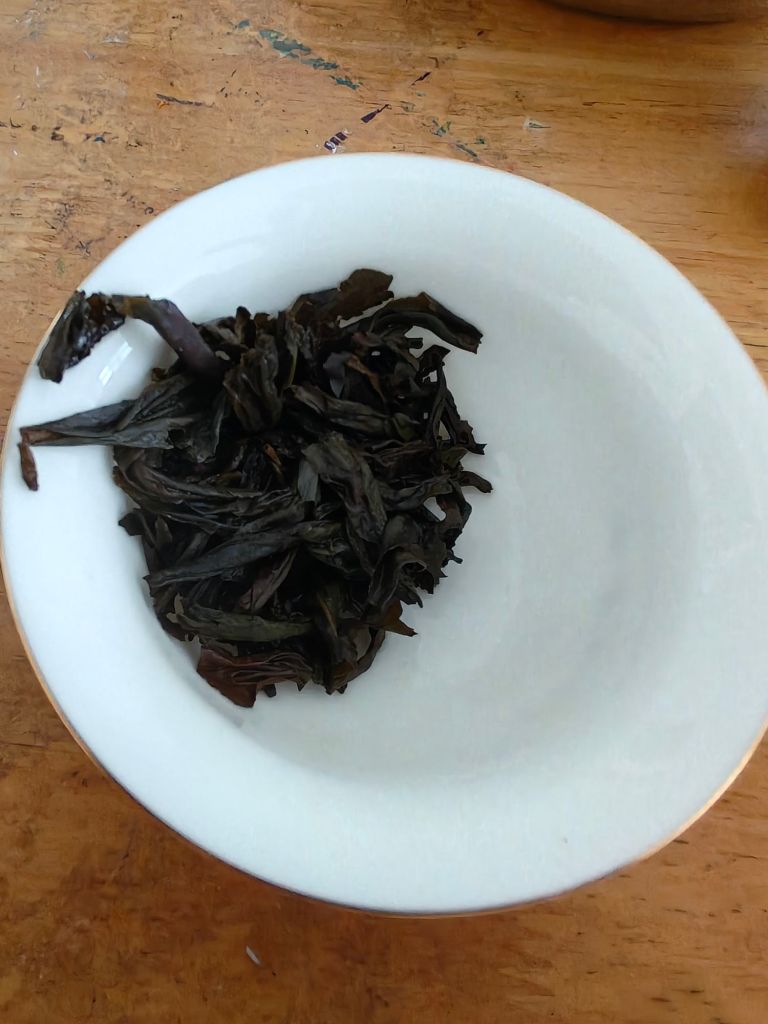
The brewed leaves remain remarkably intact after ten infusions.
Large mature leaves unfold completely alongside thick woody stems.
Their aroma carries damp forest floor, soaked bark, mineral-rich earth and fading charcoal. Hidden beneath them lies a quiet sweetness of dried dates and warm timber with faint floral notes lingering at the edges.
The tea still feels alive.
—
Reflection
This Shui Xian spoke not through dramatic flavours but through atmosphere.
Rather than overwhelming the palate, it slowly unfolded a mountain landscape shaped by rain, stone and autumn wind.
Its minerality never shouted.
Its bitterness never attacked.
Instead, both gradually revealed themselves until sweetness, wood, charcoal and stone became impossible to separate.
By the final cups, the forest disappeared.
Only mountain dew remained.
I carried away nothing except a small stone in my pocket.
And somehow, that was enough.
—
TASTING SCORECARD
Tea:
Lao Cong Shui Xian
Brewing Parameters
Water: Volvic Natural Mineral Water
Teaware: Mutton Fat Jade Porcelain Gaiwan
Leaf: 4 g
Water: 200 ml
Temperature: 95–100°C
Infusions: 9
━━━━━━━━━━━━━━━━━━━━━━
Dry Leaf Aroma
7.5/10
Charcoal, old wood, cinnamon, restrained sweetness.
Wet Leaf Aroma
8.4/10
Forest floor after rain, damp bark, dried dates, earthy sweetness, fading charcoal.
Floral
6.5/10
Subtle floral notes emerging after the rinse.
Fruit
5.5/10
Hints of dried fruits hidden beneath the roast.
Spice
7.0/10
Warm cinnamon and gentle spice throughout.
Minerality
7.7/10
The defining character of the tea. Pronounced rock minerality that grows stronger with each infusion.
Sweetness
7.5/10
Natural, restrained sweetness that follows the swallow.
Bitterness
6.8/10
Measured and balanced, never harsh.
Roast
7.8/10
Noticeable charcoal early on before integrating into the tea.
Body
7.8/10
Creamy, smooth and increasingly thick.
Mouthfeel
7.3/10
Silky, coating, lingering across the palate.
Finish
7.5/10
Long bittersweet mineral finish with lingering sweetness.
Yan Yun (Rock Rhyme)
8.6/10
Excellent. Wet stone, cave water and mountain minerality become increasingly apparent from the third infusion onward.
Longevity
8/10
Comfortably reached 8 enjoyable infusions with graceful fading.
Cha Qi
6.8/10
Gentle warming sensation throughout the body. Calm, grounding and contemplative rather than powerful.
Overall Impression
7.4/10

 worldtea
Leave a comment