Brewing Parameters
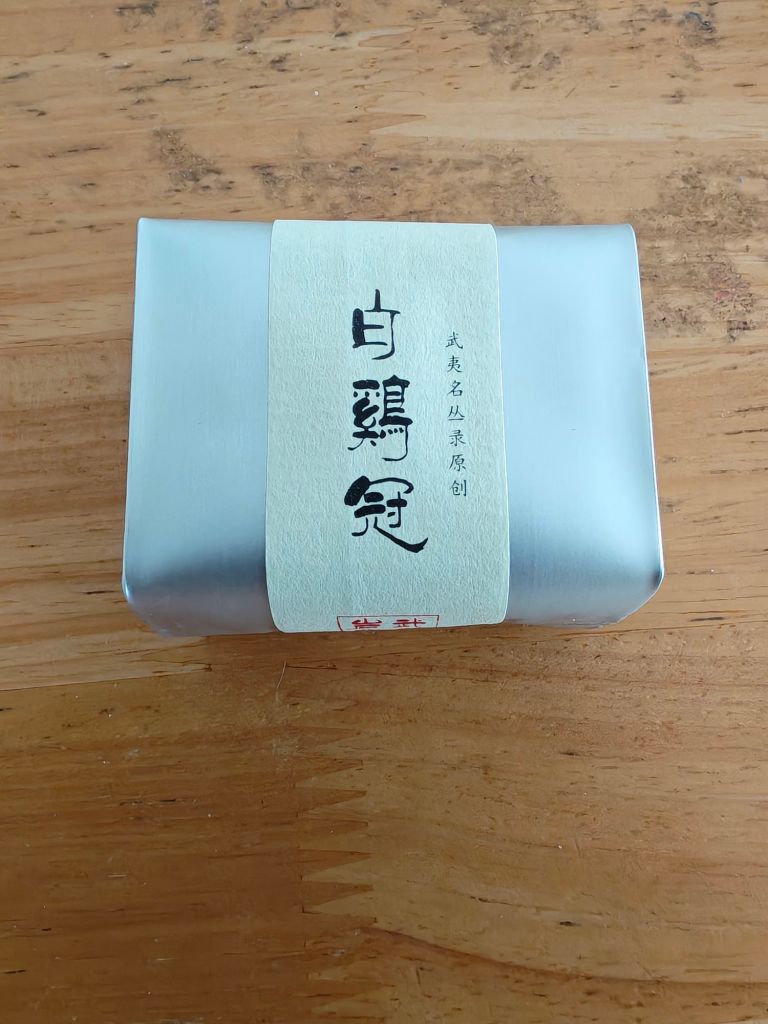
Tea: Bai Ji Guan (白鸡冠)
Water: Volvic Natural Mineral Water
Teaware: Mutton Fat Jade Porcelain Gaiwan
Leaf: 4 g
Water: 100 ml
Temperature: 95–100°C
Infusions: 9
## Dry Leaves
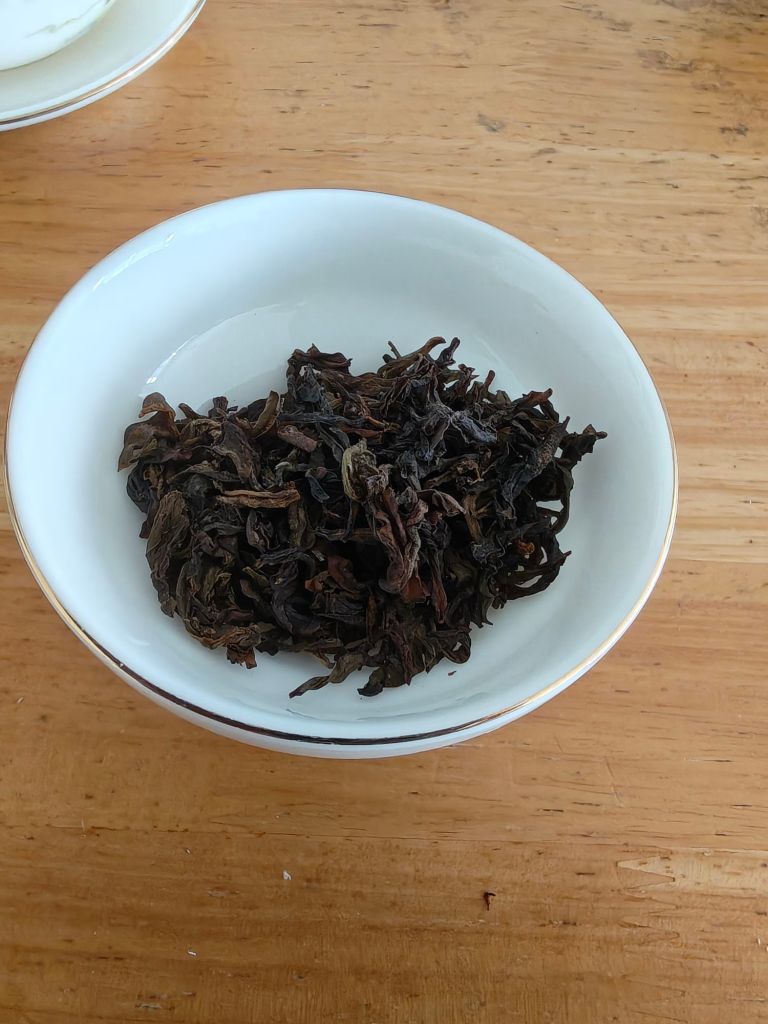
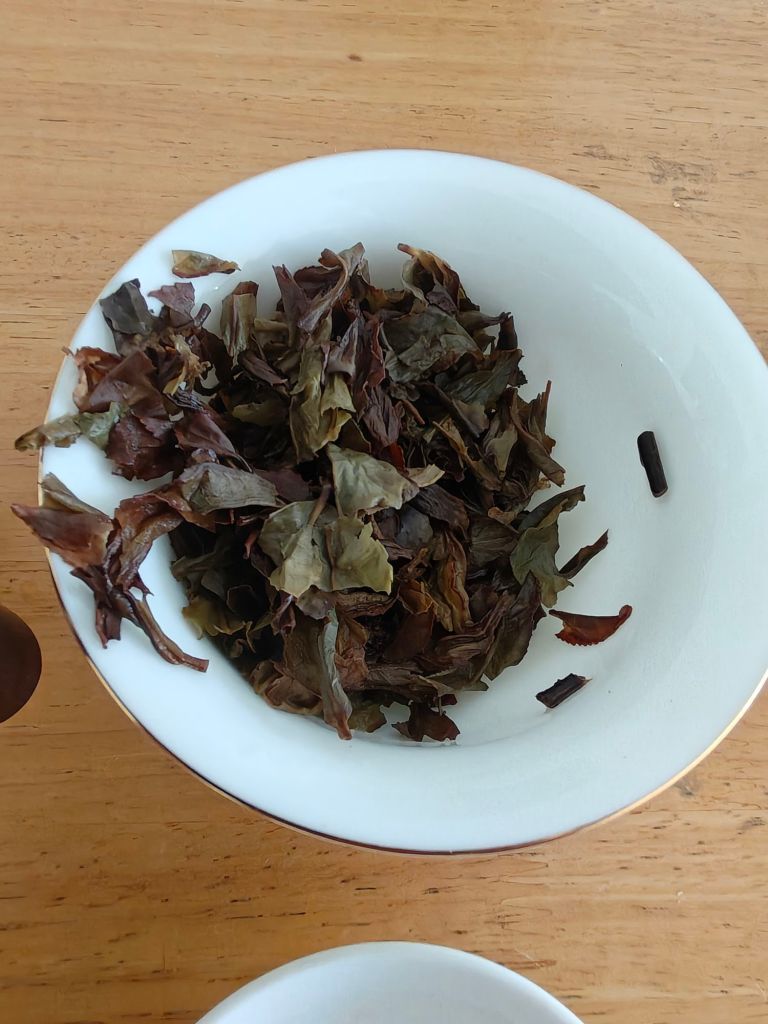
The leaves are crisp, medium to dark brown, and twisted into thin strips resembling small branches.
The first aroma reminds me of freshly plucked tea leaves, much like the scent released when handling newly harvested Longjing before pan-firing. It is green, leafy and alive rather than grassy.
As I continue smelling, a gentle charcoal roast slowly emerges, adding warmth while allowing the freshness to remain.
—
## Warmed Gaiwan
The lid immediately releases the aroma of roasted nuts, warm and comforting.
The warmed leaves echo the same character, but with greater depth.
The fresh aroma of newly plucked tea leaves gradually transforms into the scent of damp fallen leaves.
Cooked chestnuts emerge beneath the roast, bringing a gentle sweetness.
Somewhere behind them lingers a floral fragrance, thicker and fuller than chrysanthemum, quietly woven into the nutty body.
The roast has now stepped into the background.
—
## After the Rinse
The transformation is immediate.
The individual aromas that appeared earlier—fresh tea leaves, roasted nuts, chestnuts and flowers—no longer present themselves separately.
Instead, they merge into a single impression.
The leaves now resemble wet woodland at night.
Nothing dominates.
Everything belongs to the forest.
—
## First Infusion
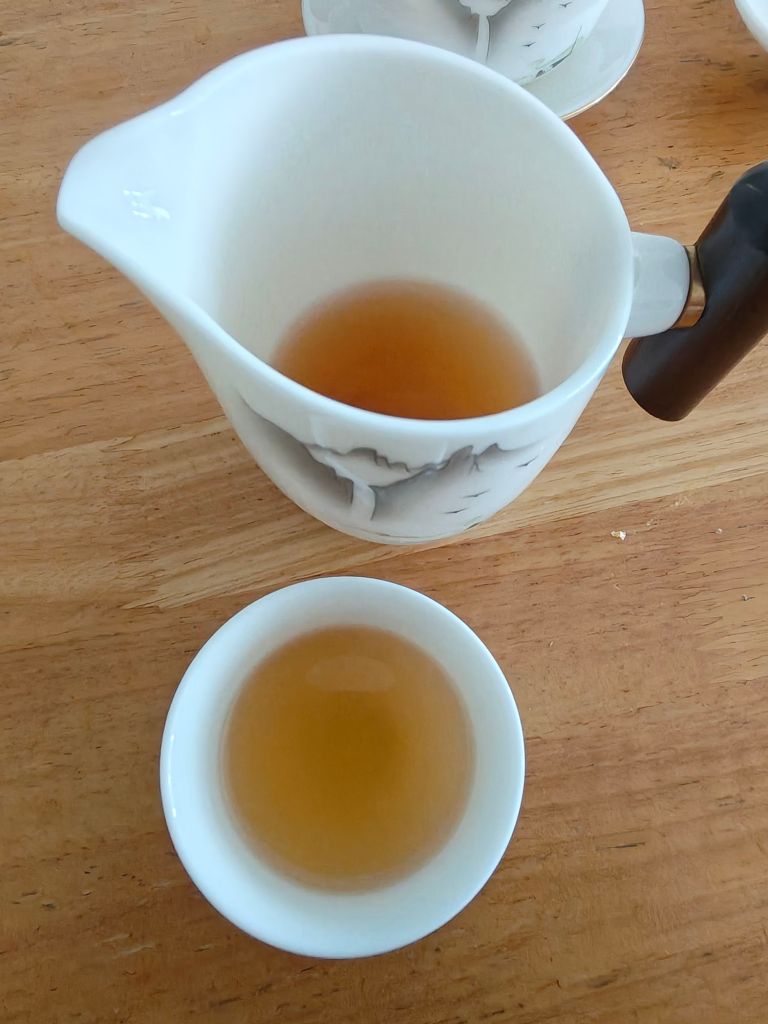
The liquor presents itself like honeyed spring water, clear, luminous and softly golden.
The lid carries only a gentle charcoal aroma.
The first sip reminds me slightly of Lao Cong Shui Xian, though lighter in body.
The minerality arrives early, leaving little doubt that this is a Wuyi rock tea.
A gentle astringency settles upon the roof of the mouth.
The liquor flows effortlessly across the tongue, yet pauses briefly at the entrance of the throat before finally descending.
—
## Second Infusion
The body grows noticeably thicker while the minerality becomes more pronounced.
Yet despite its increased weight, the liquor feels even smoother.
The mild astringency shifts from the roof of the mouth to the sides of the tongue, reminding me of the gentle tartness of dried hawthorn.
The tongue gradually becomes coated in a silky mineral film.
The liquor clings quietly to the throat after every swallow.
—
## Third Infusion
The liquor deepens slightly in colour.
For the first time, bitterness arrives together with sweetness.
Neither attempts to overpower the other.
Instead, they remain in quiet balance.
### The Landscape
As I drink, a place quietly forms.
I find myself standing within four white brick walls set alone in an endless grassland.
There is no roof.
Above me stretches a blue sky scattered with small white clouds.
The floor is nothing but grass and living earth.
There are no windows—only rectangular openings where bricks were never laid.
Beyond the walls lies only open grassland.
I remove my shoes and let my feet sink into the cool grass and warm soil.
—
## Fourth Infusion
The body becomes lighter, yet more clearly defined.
The bitterness and sweetness gradually dissolve into one another until they can no longer be distinguished.
The liquor continues to cling gently to the throat after every sip.
### The Landscape
I remain within the white brick walls.
Still barefoot.
I take time to ponder and slow down.
The grass cools my feet.
The soil remains warm.
My feet feel refreshed.
The tea cup in my hand slowly comes into view.
—
## Fifth Infusion
The flavour remains, but the liquor now clings from the throat back toward the tongue, reluctantly slipping down with each swallow.
I look at the tea cup resting in my hand.
The sun shines gently above.
There is no agenda.
Only this liquor, my surroundings, and slow sips.
The tea has become more of a feeling than a taste.
As I sip once more, the flavour has almost disappeared.
Yet the mouthfeel remains.
The quiet union of bitterness and sweetness returns.
—
## Sixth Infusion
More sweetness approaches with every sip.
It quietly invites me to enjoy the soft wind, the gentle sunlight, the drifting clouds, the grass beneath my feet, the warmth of the soil and the white brick walls surrounding me.
The walls feel cool to the touch.
Then a thought quietly arrives.
This tea is not a person.
It is not a place.
It is not a landscape.
It simply brings everything together and invites me to enjoy it.
The sweetness remains.
—
## Seventh Infusion
The liquor retains its colour.
I take a slow stroll within the white brick walls before deciding it is time to leave.
I put on my shoes.
I take another sip.
The tea grows sweeter, as though quietly asking me to stay.
My tongue and the whole of my mouth remain coated, but the tea has finally begun to loosen its gentle grip upon the throat.
—
## Eighth Infusion
The liquor lightens slightly, though only by a small degree.
Its sweetness remains intact while the minerality quietly endures.
The flavour has not faded.
The liquor now lingers mainly along the roof of the mouth, leaving behind a gentle coating.
I remove my shoes once more to feel the grass beneath my feet.
—
## Ninth Infusion
The liquor grows lighter in colour.
Only a gentle hint of its earlier flavours remains, while the sweetness and minerality continue quietly beneath the surface.
The liquor now lingers at the middle of the tongue.
I take another sip.
The vision quietly disappears.
I find myself seated once more at my tea table, the cup resting gently in my hand.
—
## Wet Leaves
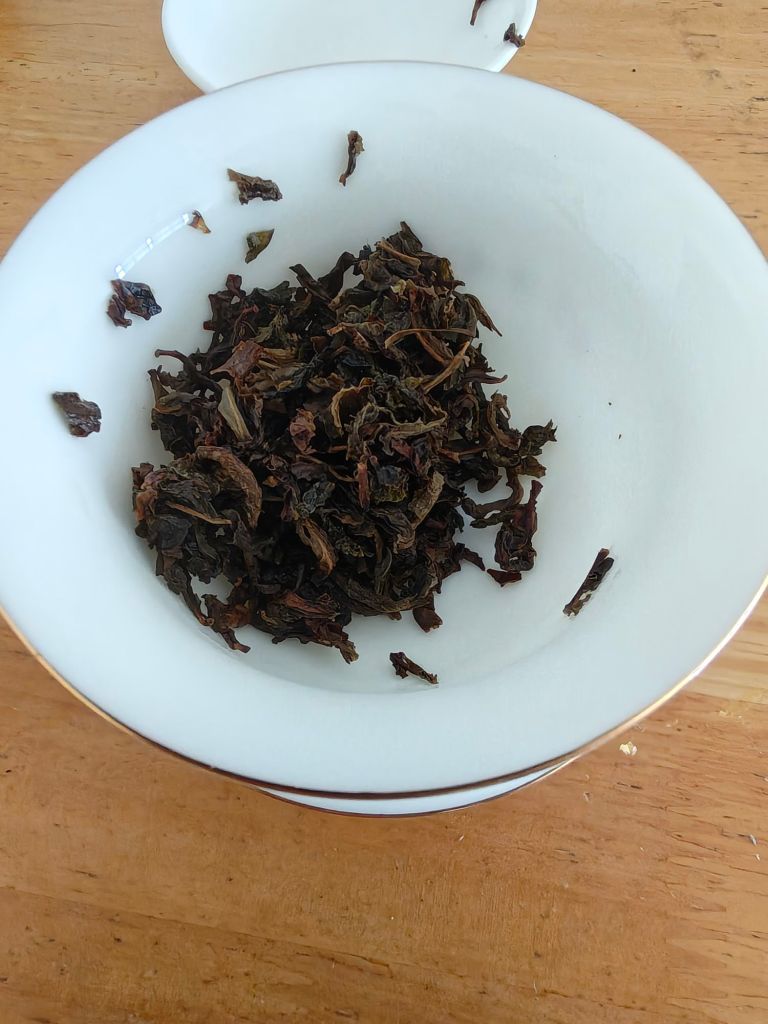
The leaves unfold almost completely, revealing broad, supple leaf surfaces shaded in olive green, chestnut and reddish brown.
Their aroma no longer separates into individual notes.
Sweetness, minerality and gentle roast have quietly settled into one another.
Even after nine infusions, the leaves still feel alive.
—
## Reflection
This Bai Ji Guan never sought to impress through intensity.
Instead, it quietly gathered flavour, texture, memory and surroundings into a single experience.
It was never the landscape.
Yet somehow, it allowed me to see it.
━━━━━━━━━━━━━━━━━━━━━━
TASTING SCORECARD
Tea:
Bai Ji Guan (白鸡冠)
Brewing Parameters
Water: Volvic Natural Mineral Water
Teaware: Mutton Fat Jade Porcelain Gaiwan
Leaf: 4 g
Water: 100 ml
Temperature: 95–100°C
Infusions: 9
━━━━━━━━━━━━━━━━━━━━━━
Dry Leaf Aroma
4/10
Freshly plucked tea leaves, gentle charcoal roast, green freshness.
Wet Leaf Aroma
7/10
Wet woodland at night, chestnuts, softened roast, quiet minerality.
Floral
5/10
Thick, rounded floral notes emerging after warming and the rinse.
Fruit
1.8/10
Very restrained. Little fruit expression throughout the session.
Nutty
7.8/10
Roasted nuts and cooked chestnuts form the heart of the tea.
Spice
0/10
Minimal spice compared to other Wuyi cultivars.
Minerality
9.5/10
Immediate rock minerality from the first infusion. Persistent and refined throughout the session.
Sweetness
9.8/10
Gradually increases through the middle infusions before quietly lingering into the finish.
Bitterness
4/10
Pleasant, balanced bitterness that quickly merges with sweetness.
Roast
4/10
Gentle roast supporting rather than dominating the tea.
Body
7/10
Initially light, thickening through the second infusion before becoming lighter yet more defined.
Mouthfeel
8/10
Silky and coating. The liquor clings first to the throat, then the roof of the mouth, before settling at the middle of the tongue.
Finish
8.8/10
Long, gentle sweetness with lingering minerality and a persistent coating.
Yan Yun (Rock Rhyme)
9/10
Distinctive rock rhyme appearing from the first infusion, becoming one of the defining characteristics of the tea.
Longevity
7/10
Comfortably sustained nine enjoyable infusions while preserving sweetness and minerality.
Cha Qi
3.8/10
Calm, gentle and quietly grounding. Encourages presence rather than intensity.
Overall Impression
7.3/10
Notes
Unlike Lao Cong Shui Xian, Bai Ji Guan expresses itself through openness rather than depth.
The tea never overwhelms with flavour. Instead, it gradually shifts attention away from itself and toward the surrounding environment.
Its defining characteristics are persistent minerality, elegant sweetness, remarkable mouthfeel, and an atmosphere of quiet presence.
 worldtea
Leave a comment